Is French Immersion Still Worth It in Calgary?
If you ask my husband whether French Immersion is worth it, he’ll say yes without skipping a beat.
Born in Ontario, he grew up in Sherwood Park after his parents immigrated from Asia. They enrolled him in French Immersion starting in Kindergarten. He didn’t love it at the time. It was harder than the regular English program. Still, he stuck with it till the end of middle school and carried those skills quietly into adulthood.

Then, during university, he got an email from a French girl from Québec who was doing a work exchange in Alberta and looking for friends. A cute accent, a friendly smile, and suddenly all that French came rushing back. It made communicating so much easier, and the rest is history.
Because of those years in French Immersion, my husband could communicate with my family, travel easily to Montréal, show off his skills at work, and help raise our daughter in a French‑speaking home. To this day, he thanks his parents for encouraging him to persevere through French Immersion.
His French Immersion days were almost 40 years ago. So what about now? Is French Immersion still worth it?
I’d say yes. Here’s why:
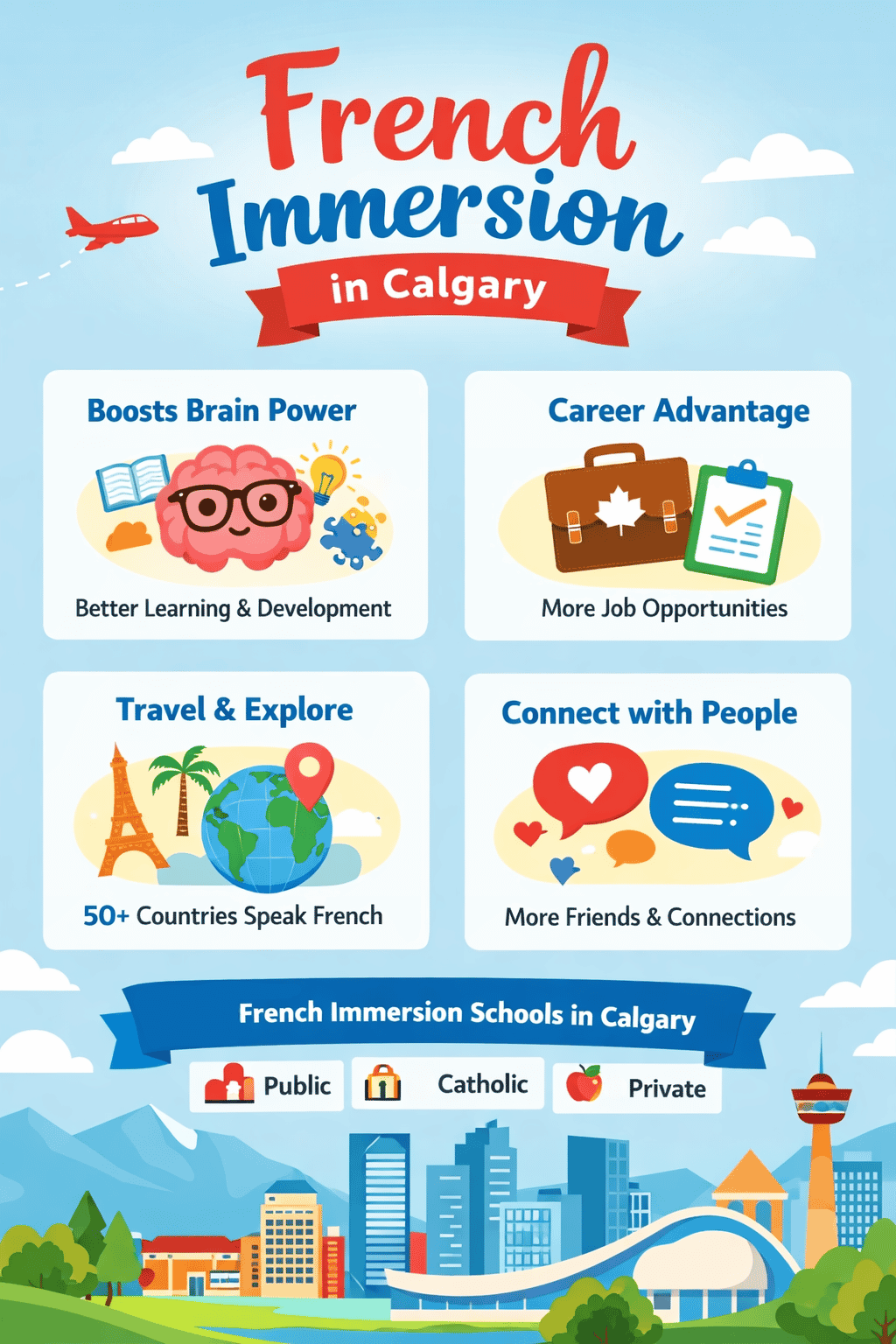
1. A second language supports healthy brain development
Let’s start with the science!
Children who learn a second language show measurable cognitive benefits. Research from the American Academy of Pediatrics reports that bilingual children often develop stronger executive functioning skills, including attention control, problem‑solving, and mental flexibility (source: AAP, 2020). Harvard’s Center on the Developing Child also highlights that early exposure to multiple languages strengthens neural pathways involved in learning and memory.
And of course, kids absorb languages more easily than adults. They pick up sounds, patterns, and vocabulary with far less effort. If your family has French‑speaking relatives, or if you live in a community where French is present, starting early makes a noticeable difference.
There’s also academic value. A study published in Child Development found that bilingual children often show stronger reading and math skills compared to monolingual peers.
2. French Immersion opens more job opportunities in Canada
French is one of Canada’s official languages, and that reality shows up everywhere in the job market. Many careers either require or strongly prefer bilingual candidates, including:
Government and public service
Airlines and tourism
Journalism and communications
Military and RCMP
Healthcare
Sales, customer service, and management
International business
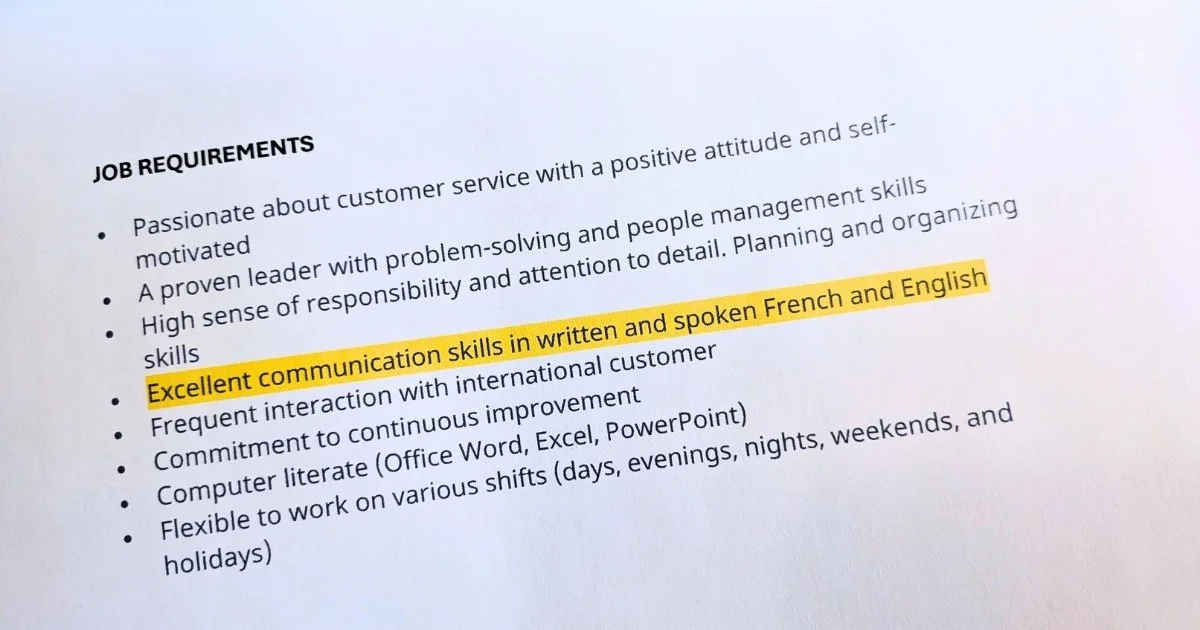
Even when French isn’t mandatory, it often moves a résumé to the top of the pile. A Calgary student who graduates from a French Immersion program has a real advantage, especially if they maintain their skills into adulthood.
3. Learning French expands travel, relocation, and work possibilities abroad
French is spoken in more than 50 countries and territories worldwide. It’s an official language in places like France, Belgium, Switzerland, Morocco, Senegal, and French Polynesia. It’s also widely used in international organizations such as the UN, NATO, and the Red Cross.

Being able to communicate while traveling or working abroad makes the experience richer and more meaningful. You understand the culture better, navigate more easily, and connect with people in a way that simply isn’t possible when relying on English alone.
4. Speaking French helps you connect with more people
This is the part that often gets overlooked. Language isn’t just a skill. It’s a bridge.
My husband’s story is a perfect example. French Immersion didn’t just give him a second language. It gave him access to relationships, friendships, and experiences he wouldn’t have had otherwise. It helped him connect with my family, with our daughter’s school community, and with people we meet when we travel. He absolutely loves French improv and movies!
So, is French Immersion worth it in Calgary?
For many families, absolutely. It supports brain development, strengthens academic skills, opens career opportunities, and creates meaningful connections. Calgary has a strong French Immersion network, and for kids who stick with it, the long‑term benefits can be life‑changing.
And who knows? Maybe one day your child will get an unexpected message from someone with a charming accent, and all those years of French will suddenly make perfect sense... 😉
How many French Immersion schools are there in Calgary?
Calgary families actually have a lot of choice when it comes to French Immersion. Across public, Catholic, and private schools, there over 40 French Immersion schools in the city.
Here’s how that breaks down:
CBE (Public): Up to 24 schools Including Hidden Valley School, Varsity Acres School, and William Aberhart High School.
CCSD (Catholic): Up to 18 schools Including St. Cecilia School, and St. Francis High School.
Private schools: 3 programs Including Calgary French & International School (CFIS), Lycée Louis Pasteur, and West Island College.
For families considering French Immersion, this means strong continuity from elementary all the way to high school, plus multiple neighbourhood options depending on where you live.
✅ Links to the cited sources
1. American Academy of Pediatrics – bilingualism & executive function
The AAP has published multiple pieces on bilingualism and cognitive development. A commonly referenced overview is here: https://publications.aap.org/pediatrics/article/145/3/e20193957/76956 (publications.aap.org in Bing)
2. Harvard Center on the Developing Child – early brain development & language exposure
Their “Brain Architecture” and early‑language‑exposure resources are here: https://developingchild.harvard.edu/science/key-concepts/brain-architecture/ (developingchild.harvard.edu in Bing)
3. Child Development – bilingual children’s academic performance
A representative peer‑reviewed article on bilingual language development and academic outcomes: https://academic.oup.com/cdev/article/96/1/176/7281821 (academic.oup.com in Bing)